
Fantasía Fina
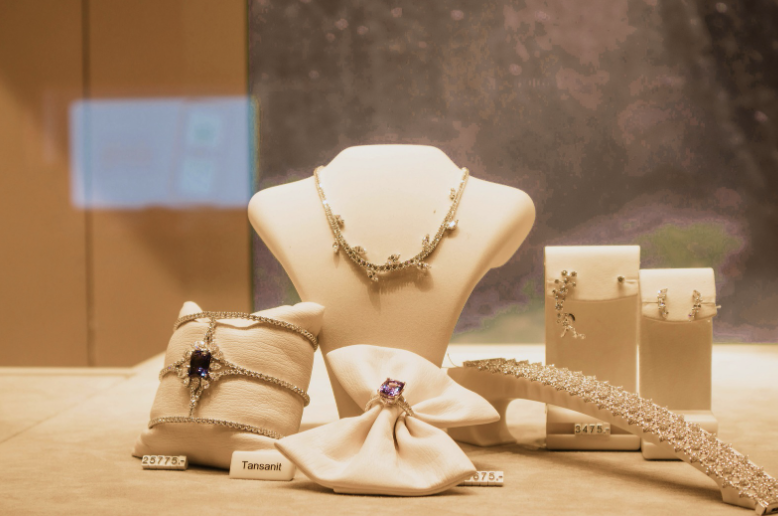
A tarnished necklace becomes a question every Turbo Thinker® knows well: when novelty fades, do we resparkalize, or do we let go?
Fantasía Fina
This morning I went to put on a necklace and noticed that it was no longer so bright and shiny.
Story of my life.
As Turbo Thinkers™, this is an eternal challenge. How do we deal with the disappointment of something losing its shine? Our brains get turned on, enjoy the novelty, then eventually get bored.
When I purchased this necklace, my Abuela would call it a collar, I knew it was not pure gold. It is, as she put it, fantasía fina: nice costume jewelry, as opposed to a prenda, real expensive jewelry. I'd bought it on a recent trip to Mexico City, at a high-end art market in Roma Norte. But this morning, it was not so shiny. I had to find a way to clean it and resparkalize it. I felt a bit of disappointment in this necklace, now that it was causing me to work.
But I also felt a little disappointment in myself, for spending the money on something that didn't last and wasn't built to last. I should have known better.
And yet I derived immense pleasure from my pretty collar. Its beauty, the original design, my conversation with the artist: a young woman so passionate about her craft, skilled not only at jewelry-making but at connecting with strangers. The memory of my long weekend in Mexico City, full of bright colors, incredible flavors, long walks along lush esplanades, millennia of history in museums and architecture: a feast for every sense, a happiness that lit up every corner of my brain. The collar served as my souvenir, a way to reignite that joy.
As Turbo Thinkers™, our brains get turned on by the bright and shiny, whether it's an object, an idea, or a person. They light up with novelty! Excitement! Our attention gets snatched and sent into orbit.
We learn to regulate that attention, to pause and ask: Is it worth it? Do I trust it? Is it the best choice? Do I trust myself? Am I actually going to stick with this? How long will I like it? Is this worth the investment?
Sound familiar?
We're prone to go all in: overspend, ignore our other obligations, then burn out. Or we avoid the decision altogether, denying ourselves the experience, stuck in avoidance and analysis paralysis.
So what to do? Is it worth the money, the time, the space, the effort? When is something worth it, and how do we know? What's our criteria? Who decides?
No one knows but you. So personal! Sometimes we benefit from a thinking partner to help us process out loud. What are your core values? How does this reflect the person you want to be? How does this speak to your highest self, your truest self at the fullest expression? How do you feel when you have it? What's the difference between eudaemonic joy and hedonistic pleasure? (Hedonism triggers dopamine: an "I want more" sensation. Joy triggers serotonin and oxytocin: an "I have enough" sensation.) Does it make you feel good about yourself? Does it align with your future self?
In the end, was I annoyed that my necklace was no longer so shiny? Yes. Could I clean it? Yes. Did I regret the purchase? No.
How do we resparkalize a habit, a hobby, a job, a relationship? How do we infuse it with novelty? Zhuzh it up with glitter and feathers?
But also, at what point do we let go? How do we know it's time to discard something, recycle it, donate it? Might it bring someone else joy, become a new treasure for someone else? At what point can we honestly say we've resparkalized this as much as we can? That it no longer serves the person we're becoming? That it has served its purpose, and we're ready to move on?
That's easy enough with an old pair of shoes or a chipped coffee mug. But what about when it's your spouse? Or your career?
What's our why? What's the objective? How does this still serve us? What's within our control? Where can we let go?
We can't turn a rhinestone into a diamond, or plastic into gold. But we can choose to enjoy it, and be queens anyway.
What's worth resparkalizing?
What's ready to be let go?
What does our future self already know?
Fantasía Fina is a blog post by Adela Baker, ADHD coach and founder of Mind Coach, LLC in New Orleans. Using a costume necklace from Mexico City as a metaphor, Adela explores how the Turbo Thinker® brain responds to novelty, and what happens when that initial spark fades from an object, a habit, or a relationship. The post reflects on the difference between resparkalizing something worth keeping and recognizing when it has served its purpose.
Read more blogs on deepening commitments: Cultivating Excellence: When 2026 Is About Depth, Not Expansion
Read more blogs on giving yourself permission to let go: Collaborate, Delegate, Automate, or Eliminate
Read more blogs on the vulnerability of curation and the challenge of self-regulation: The Turbo-Thinker's© Dilemma